Essential Features of WHO-Compliant Pharmaceutical Cold Rooms
High Performance Insulation
A pharmaceutical modular coldroom should use high-density insulated panels with excellent thermal performance. This reduces temperature fluctuations while minimizing energy consumption.
Additionally, insulated floors, ceilings, and doors help maintain stable internal conditions.
Continuous Temperature Monitoring
WHO requires continuous monitoring using calibrated sensors.
Modern systems should include:
- Data loggers
- Digital controllers
- Alarm systems
- Remote monitoring
- SMS and email alerts
- Cloud-based reporting
As a result, facility managers receive immediate notifications whenever temperatures move beyond acceptable limits.
Reliable Refrigeration System
An efficient refrigeration system forms the backbone of every pharmaceutical storage facility.
Reliable systems may include:
- Scroll condensing units
- Variable speed compressors
- Redundant refrigeration units
- Backup cooling systems
In larger facilities, industrial refrigeration, ammonia refrigeration, or glycol & water chillers offer outstanding efficiency and reliability.
Why Is Validation Necessary?
Validation ensures that pharmaceutical cold rooms consistently maintain the required temperature under real operating conditions. Moreover, it proves that the storage environment performs reliably throughout its entire lifecycle. Without proper validation, even a well-designed facility may fail to meet regulatory expectations.
A complete validation process typically includes:
- Installation Qualification (IQ)
- Operational Qualification (OQ)
- Performance Qualification (PQ)
- Temperature Mapping
- Calibration Verification
As a result, pharmaceutical companies receive documented proof that their cold storage facilities comply with WHO standards. Furthermore, this evidence strengthens regulatory compliance, supports quality audits, and builds confidence in product safety.
Good Air Distribution Matters
Reliable refrigeration alone cannot guarantee safe pharmaceutical storage. Instead, proper air circulation plays an equally important role in maintaining stable temperatures throughout the cold room.
A professionally engineered medical coldroom should provide:
- Uniform air circulation
- Balanced airflow
- Even temperature distribution
- Minimal humidity variation
Consequently, every shelf and storage zone maintains the required conditions. In addition, consistent airflow eliminates temperature fluctuations, protects sensitive medicines, and preserves product quality across the entire storage space.
Backup Systems Improve Safety
Power failures can damage pharmaceutical inventory within a short period. Therefore, every pharmaceutical cold room should include dependable backup systems to protect valuable medicines and vaccines during unexpected outages.
WHO recommends backup solutions such as:
- Standby generators
- Emergency refrigeration
- Battery-supported monitoring
- Alarm notifications
- Remote monitoring systems
As a result, facility managers receive immediate alerts whenever operating conditions change. Furthermore, backup systems help maintain uninterrupted cooling, reduce product losses, and ensure compliance even during emergencies.
Hygiene and Clean Design
Maintaining a hygienic storage environment is just as important as controlling temperature. Therefore, pharmaceutical cold rooms should feature clean, durable, and easy-to-maintain interiors that support strict sanitation protocols.
WHO-compliant facilities should include:
- Easy-to-clean surfaces
- Corrosion-resistant materials
- Rounded internal corners
- Hygienic floor finishes
- Proper drainage
Consequently, routine cleaning becomes faster and more effective. Moreover, these design features minimize contamination risks, improve operational hygiene, and help pharmaceutical facilities maintain consistent compliance with WHO quality standards.
Which Cold Room Configuration Fits Pharmaceutical Applications?
Different pharmaceutical operations require different storage solutions.
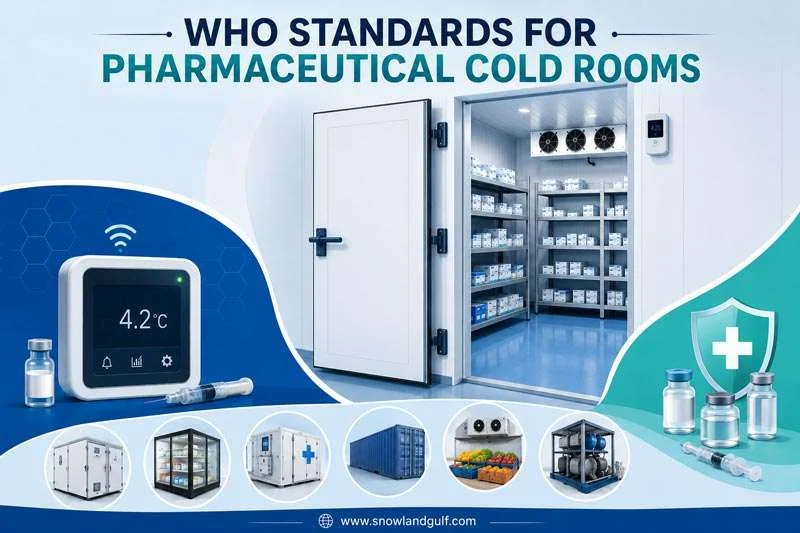
Common options include:
Designed specifically for vaccines, medicines, blood products, and laboratory materials.
Offers flexible installation, expansion, and relocation for pharmaceutical facilities.
Combines chilled and frozen storage within a single insulated structure, making it ideal for facilities handling multiple pharmaceutical products.
Provides excellent product visibility for hospitals, pharmacies, and medical research centers.
Suitable for remote healthcare facilities requiring fast deployment.
Perfect for temporary pharmaceutical storage, disaster relief, and mobile healthcare operations.
Provide transportable pharmaceutical storage with reliable temperature control.
Besides these solutions, pharmaceutical companies may also require blast chillers and freezers, pre-cooler cold rooms, ripening chambers for biotechnology applications, and large refrigerated warehouses for national distribution networks.
Choosing the Right Cold Room Manufacturer
Selecting the right supplier directly impacts long-term performance.
A trusted cold room manufacturer should provide:
- WHO-compliant designs
- GMP-friendly construction
- Energy-efficient refrigeration
- Reliable monitoring systems
- Comprehensive validation support
- Preventive maintenance
- 24/7 technical service
Furthermore, experienced manufacturers understand regional climate challenges and regulatory requirements.
Snowland Delivers WHO-Compliant Pharmaceutical Solutions
Snowland has become a trusted cold storage manufacturer by delivering customized pharmaceutical cold rooms across the Middle East and international markets.
Our expertise includes:
- Pharmaceutical medical coldroom
- Vaccine storage facilities
- Walk-in pharmaceutical cold rooms
- Pharmaceutical distribution warehouses
- Hospital cold rooms
- Research laboratory cold storage
- Temperature-controlled logistics solutions
Additionally, Snowland supports customers looking for cold room UAE solutions, cold storage Dubai facilities, and specialized pharmaceutical storage projects throughout the GCC.
Our network also serves businesses searching for a cold room manufacturer Abu Dhabi, cold room supplier Al Ain, best cold room supplier in Sharjah, cold room manufacturer in GCC, cold room manufacturer in Oman, cold room installation in Bahrain, cold room manufacturer in Saudi Arabia, cold room manufacturer in Qatar, cold room manufacturer in Kuwait, cold room supplier in India, cold room supplier in UK, and cold room supplier in Africa.
Common Compliance Mistakes
Many pharmaceutical facilities unintentionally compromise storage quality.
Common issues include:
- Poor insulation
- Incorrect temperature monitoring
- Inadequate airflow
- Missing validation reports
- Irregular calibration
- Door leakage
- Lack of backup refrigeration
- Incomplete maintenance records
However, regular inspections and preventive maintenance eliminate most of these risks.

 The WHO Standards for Pharmaceutical Cold Rooms play a critical role in protecting the quality, safety, and effectiveness of medicines, vaccines, biologics, and temperature-sensitive healthcare products. Every pharmaceutical facility must maintain strict environmental conditions throughout the storage process. Therefore, investing in a properly designed medical coldroom is not just a regulatory requirement but also a business necessity.


