
 Food safety is one of the most important responsibilities for any food business. Whether you operate a restaurant, supermarket, catering company, food processing plant, or refrigerated warehouse, maintaining proper storage conditions directly affects product quality, customer satisfaction, and regulatory compliance.
Moreover, food products are highly sensitive to temperature fluctuations. Even a brief rise in temperature can accelerate bacterial growth, reduce shelf life, and increase the risk of spoilage. Consequently, businesses must implement strict cold storage procedures to protect both their inventory and reputation.
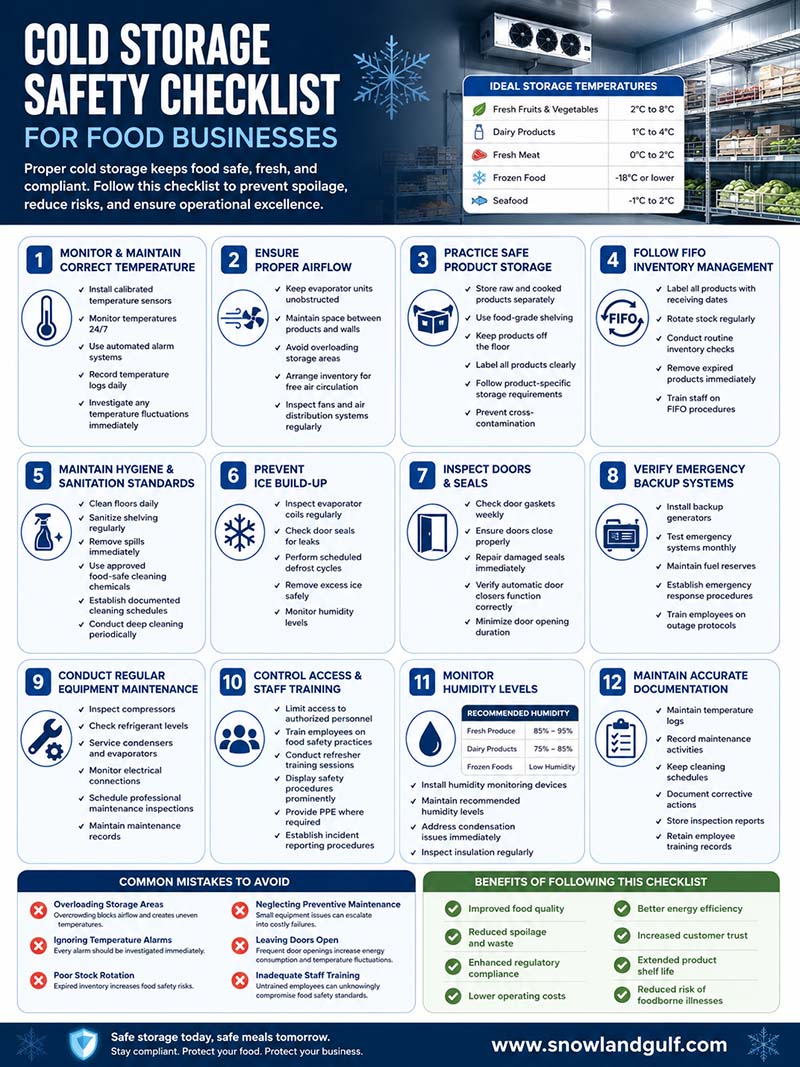
A comprehensive Cold Storage Safety Checklist for Food Businesses helps organizations maintain food quality, reduce operational risks, and improve efficiency. Furthermore, companies operating a cold room UAE facility or managing a cold storage Dubai warehouse face additional challenges because of the region's extreme climate. Therefore, adopting industry best practices becomes essential for long-term success.
Why is Cold Storage Safety Important?
Cold storage systems preserve food quality and prevent spoilage. However, refrigeration alone does not guarantee food safety. In addition, businesses must manage airflow, humidity, inventory rotation, sanitation, and equipment maintenance.
When cold storage systems fail, the consequences can be severe. As a result, businesses may experience product loss, customer complaints, financial setbacks, and regulatory penalties.
Furthermore, harmful bacteria such as Salmonella, Listeria, and E. coli multiply rapidly when food remains outside recommended temperature ranges. Therefore, maintaining consistent storage conditions should always be a top priority.
Proper cold storage management helps businesses:
- Preserve product freshness
- Extend shelf life
- Reduce food waste
- Improve inventory management
- Lower operating costs
- Ensure food safety compliance
- Increase customer trust
- Protect brand reputation
Consequently, every food business should consider cold storage safety a strategic investment rather than a routine operational task.


What Is a Cold Storage Safety Checklist?
A cold storage safety checklist is a structured set of procedures designed to ensure refrigeration systems operate safely and efficiently.
Rather than waiting for equipment failures or food spoilage incidents, businesses can proactively identify risks before they become major problems. As a result, they can improve operational efficiency and reduce costly disruptions.
Typically, a cold storage safety checklist includes:
- Temperature monitoring
- Air circulation management
- Hygiene procedures
- Inventory control
- Equipment inspections
- Humidity management
- Staff training
- Emergency preparedness
Because all these elements contribute to food safety, routine inspections should be conducted and documented consistently.
Temperature Monitoring Comes First
Temperature control remains the foundation of every successful cold storage operation.
Without proper temperature management, food products can deteriorate quickly. Therefore, businesses should install reliable monitoring systems capable of tracking temperatures around the clock.
Recommended Storage Temperatures
| Product Type | Recommended Temperature |
| Fresh Produce | 2°C to 8°C |
| Dairy Products | 1°C to 4°C |
| Fresh Meat | 0°C to 2°C |
| Seafood | -1°C to 2°C |
| Frozen Food | -18°C or Below |
Temperature Safety Checklist
✔ Install calibrated temperature sensors
✔ Monitor temperatures continuously
✔ Maintain daily temperature logs
✔ Use automated alarm systems
✔ Verify sensor accuracy regularly
✔ Investigate temperature deviations immediately
Additionally, cloud-based monitoring systems provide real-time alerts. Consequently, facility managers can respond quickly and prevent product losses.
Maintain Proper Airflow Throughout the Facility
While temperature control is essential, airflow management is equally important.
When airflow becomes restricted, temperature inconsistencies develop within the storage area. Consequently, certain products may experience premature spoilage.
Therefore, businesses should maintain proper spacing between products and refrigeration equipment.
Airflow Best Practices
✔ Keep evaporators unobstructed
✔ Avoid overcrowding storage areas
✔ Leave space between products
✔ Maintain clearance from walls
✔ Inspect fan systems regularly
✔ Remove airflow obstructions
Furthermore, proper airflow improves cooling efficiency and reduces energy consumption.
Store Products Correctly
Proper product organization significantly reduces contamination risks.
Although refrigeration slows bacterial growth, incorrect storage practices can still compromise food safety. Therefore, businesses should establish dedicated storage zones for different food categories.
Product Storage Checklist
✔ Separate raw and cooked foods
✔ Use food-grade shelving
✔ Keep products off the floor
✔ Label inventory clearly
✔ Maintain product traceability
✔ Store allergens separately
Moreover, organized storage simplifies inventory management and improves operational efficiency.
Follow FIFO Inventory Management
FIFO stands for First In, First Out.
This inventory management method ensures older stock is used before newer inventory. As a result, businesses can minimize waste and maximize profitability.
FIFO Checklist
✔ Label products with receiving dates
✔ Rotate stock regularly
✔ Conduct inventory inspections
✔ Remove expired products promptly
✔ Train staff on FIFO procedures
Furthermore, FIFO helps maintain consistent product quality throughout the supply chain.
Keep Cold Rooms Clean
Cleanliness directly impacts food safety.
Even the most advanced modular coldroom, combi coldroom, or visi coldroom can become a contamination risk if sanitation practices are ignored.
Cleaning Checklist
✔ Clean floors daily
✔ Sanitize shelving regularly
✔ Remove spills immediately
✔ Use food-safe cleaning chemicals
✔ Schedule deep cleaning sessions
✔ Maintain cleaning records
As a result, businesses create a safer environment while reducing contamination risks.
Prevent Ice and Frost Build-Up
Ice accumulation can significantly reduce refrigeration efficiency.
Furthermore, excessive frost places additional strain on refrigeration equipment. Consequently, energy consumption increases while cooling performance decreases.
Frost Prevention Checklist
✔ Inspect evaporator coils
✔ Check automatic defrost systems
✔ Monitor humidity levels
✔ Verify door seals
✔ Remove excessive frost promptly
Therefore, regular inspections help maintain optimal refrigeration performance.
Inspect Doors and Seals Regularly
Cold room doors experience constant use throughout daily operations.
Over time, door gaskets can wear out and allow warm air to enter the storage area. Consequently, temperature fluctuations become more frequent.
Door Inspection Checklist
✔ Check door seals weekly
✔ Ensure doors close completely
✔ Replace damaged gaskets
✔ Test automatic door closers
✔ Minimize door opening times
Moreover, well-maintained doors help reduce energy costs.
Prepare for Unexpected Power Failures
Power outages can quickly compromise food safety.
Therefore, every facility should maintain emergency backup systems and documented response procedures.
Emergency Preparedness Checklist
✔ Install backup generators
✔ Test emergency systems monthly
✔ Maintain fuel reserves
✔ Develop emergency protocols
✔ Train staff regularly
As a result, businesses can protect valuable inventory during unexpected disruptions.
Schedule Preventive Maintenance
Preventive maintenance is one of the most effective ways to avoid costly equipment failures.
Whether you operate medical coldroom facilities, refrigerated containers, or large-scale refrigerated warehouses, routine maintenance remains essential.
Maintenance Checklist
✔ Inspect compressors
✔ Check refrigerant levels
✔ Service condensers
✔ Verify evaporator performance
✔ Inspect electrical connections
✔ Maintain maintenance records
Furthermore, preventive maintenance improves energy efficiency and extends equipment lifespan.
Why Is Humidity Control Important?
Humidity directly affects product quality and shelf life.
If humidity levels become too high, condensation and mold growth can occur. Conversely, low humidity may cause products to dry out prematurely.
Humidity Management Checklist
✔ Install humidity monitoring devices
✔ Maintain recommended humidity levels
✔ Address condensation immediately
✔ Inspect insulation regularly
✔ Improve ventilation when necessary
Consequently, businesses can preserve product quality and reduce waste.
Train Employees Consistently
Even the best refrigeration systems depend on well-trained employees.
Therefore, businesses should invest in ongoing training programs to ensure staff understand cold storage procedures.
Training Checklist
✔ Food safety awareness
✔ Temperature monitoring procedures
✔ Cleaning protocols
✔ Emergency response plans
✔ Inventory management techniques
✔ Equipment operation guidelines
Furthermore, trained employees identify potential issues before they become serious problems.
Maintain Accurate Documentation
Documentation supports compliance, accountability, and operational consistency.
In addition, detailed records simplify inspections and audits.
Essential Records
✔ Temperature logs
✔ Maintenance reports
✔ Cleaning schedules
✔ Employee training records
✔ Inspection reports
✔ Corrective action documentation
Therefore, businesses should maintain organized records at all times.
Common Cold Storage Mistakes to Avoid
Many businesses unknowingly make mistakes that compromise food safety.
Overloading Storage Areas
Overcrowding restricts airflow and creates uneven temperatures.
Ignoring Temperature Alarms
Every alarm should trigger immediate investigation.
Delaying Maintenance
Small issues often become major equipment failures.
Leaving Doors Open
Frequent door openings increase energy consumption.
Poor Inventory Rotation
Improper stock rotation increases spoilage risks.
Inadequate Employee Training
Untrained staff can unintentionally compromise food safety standards.
Advanced Cold Storage Solutions for Food Businesses
Modern food businesses require more than traditional cold rooms.
Therefore, specialized refrigeration systems have become increasingly popular.
Pre-Cooler Cold Rooms
These facilities rapidly remove field heat from freshly harvested produce.
Ripening Chambers
Ripening chambers provide controlled environments for bananas and other fruits.
Blast Chillers and Freezers
These systems rapidly reduce product temperatures while preserving quality.
Container Coldrooms
Container coldrooms offer flexible and cost-effective refrigeration solutions.
Refrigerated Warehouses
Large-scale facilities support food distribution and logistics operations.
Skid Mounted Cold Room Solutions
These systems provide efficient refrigeration for remote industrial sites.
The Growing Importance of Industrial Refrigeration
As food businesses expand, advanced cooling technologies become increasingly important.
Today, many facilities rely on:
- Industrial refrigeration systems
- Ammonia refrigeration technology
- Glycol & water chillers
- Energy-efficient compressors
- Smart monitoring systems
Furthermore, these technologies improve efficiency while reducing operating costs.
Why Choose Snowland?
Snowland has established itself as a trusted cold room manufacturer and cold storage manufacturer serving businesses across multiple industries.
The company provides customized solutions including:
- Modular coldroom systems
- Combi coldroom facilities
- Visi coldroom installations
- Medical coldroom projects
- Refrigerated containers
- Blast chillers and freezers
- Ripening chambers
- Industrial refrigeration systems
Moreover, Snowland focuses on quality, energy efficiency, reliability, and long-term customer support.
Serving Businesses Across the GCC and Beyond
Snowland supports clients across multiple international markets.
Whether you are searching for a:
- Cold room manufacturer Abu Dhabi
- Cold room supplier Al Ain
- Best cold room supplier in Sharjah
- Coldroom supplier in Oman
- Cold room installation in Bahrain
- Cold room manufacturer in Saudi Arabia
- Cold room manufacturer in Qatar
- Cold room manufacturer in Kuwait
- Cold room supplier in India
- Cold room supplier in UK
- Cold room supplier in Africa
- Cold room manufacturer in GCC
Snowland delivers tailored refrigeration solutions designed to meet diverse operational requirements.
Frequently Asked Questions
Most food products require temperatures between 0°C and 5°C, although specific requirements vary by product category.
Continuous monitoring is recommended, while manual verification should occur daily.
Proper airflow ensures consistent temperatures and prevents localized hot spots.
Most facilities should schedule professional maintenance every six months.
Temperature fluctuations remain one of the most common causes of food spoilage.
Implementing a comprehensive Cold Storage Safety Checklist for Food Businesses is essential for protecting food quality, maintaining compliance, and reducing operational risks. Moreover, proper temperature control, airflow management, sanitation, preventive maintenance, and employee training work together to create a safe and efficient storage environment.
Furthermore, businesses operating in the UAE and across the GCC must pay special attention to refrigeration performance due to challenging climatic conditions. Therefore, partnering with an experienced provider such as Snowland can help ensure long-term reliability and operational success.
Whether you need a cold room UAE installation, a cold storage Dubai facility, a modular coldroom, a refrigerated warehouse, or advanced industrial refrigeration solutions, following a structured cold storage safety checklist will help safeguard your products, customers, and business reputation for years to come.
HVAC informed business listings on UAE platforms, enhance transparency and ease of verification for customers.


