Why HACCP is Critical in Cold Storage Systems
Cold storage environments are highly sensitive. Even slight temperature deviations can lead to spoilage or contamination.
Here’s why HACCP becomes essential:
- It prevents microbial growth
- It ensures consistent temperature control
- It minimizes product loss
- It enhances customer trust
- It supports regulatory compliance
Furthermore, businesses using modular coldroom, combi coldroom, or medical coldroom setups must implement stricter monitoring systems.
Key Principles of HACCP in Cold Storage
To achieve HACCP compliance, companies must follow seven core principles. These principles guide the design and operation of every cold room installation in Bahrain, cold room manufacturer in Saudi Arabia, or cold room manufacturer in Qatar project.
-
Hazard Analysis
First, identify potential hazards such as:
- Biological contamination
- Chemical exposure
- Physical damage
For example, improper handling in a visi coldroom can lead to contamination risks.
-
Identify Critical Control Points (CCPs)
Next, determine points where hazards can be controlled.
In cold storage, CCPs typically include:
- Temperature control systems
- Loading and unloading zones
- Storage segregation areas
-
Set Critical Limits
Then, define acceptable limits.
For instance:
- Frozen storage: below -18°C
- Chilled storage: 0°C to 4°C
These limits must be strictly maintained in all refrigerated containers and cold rooms.
-
Monitor Procedures
Continuous monitoring is essential. Therefore, automated systems are widely used by every leading cold room manufacturer in GCC.
Examples include:
- Digital temperature logging
- Alarm systems
- Remote monitoring
-
Corrective Actions
Whenever deviations occur, immediate action is required.
For example:
- Adjust temperature settings
- Isolate affected products
- Document incidents
-
Verification Procedures
Regular audits confirm that the system works effectively.
Thus, businesses working with a cold room manufacturer in Kuwait or other regions must ensure periodic inspections.
-
Documentation and Record Keeping
Finally, proper documentation ensures traceability.
This includes:
- Temperature logs
- Maintenance records
- Inspection reports
How to Implement HACCP in a Cold Room Setup
Implementing HACCP is not just about paperwork. Instead, it begins with proper design and installation.
Choose the Right Cold Room Design
Start by selecting the appropriate system:
Working with an experienced cold room supplier in UAE like Snowland ensures compliance from the design stage itself.
Install Reliable Refrigeration Systems
Efficient refrigeration is the backbone of HACCP compliance.
Therefore, always ensure:
- Uniform cooling distribution
- Energy-efficient compressors
- Backup systems
This is particularly important in refrigerated containers used for transport.
Ensure Proper Insulation
High-quality insulation prevents temperature fluctuations.
Thus, leading cold storage manufacturer solutions include:
- PUF panels
- Airtight sealing
- Thermal barriers
Train Staff Regularly
Even the best systems fail without trained personnel.
So, ensure your team understands:
- HACCP principles
- Hygiene practices
- Emergency procedures
Common HACCP Risks in Cold Storage
Understanding risks helps in preventing failures.
Temperature Fluctuations
Frequent door opening or poor insulation can disrupt temperature.
Cross Contamination
Improper segregation of products increases contamination risks.
Equipment Failure
Breakdowns in refrigeration systems can lead to major losses.
Poor Maintenance
Neglected systems reduce efficiency and compliance.
How Snowland Supports HACCP Compliance
Snowland is a trusted name in delivering HACCP-ready solutions.
As a professional cold room manufacturer, Snowland ensures:
- Advanced temperature control systems
- High-quality insulation panels
- Customized cold storage solutions
- Compliance with international standards
Moreover, Snowland operates across regions, including:
This wide presence ensures consistent quality and compliance.
Benefits of HACCP-Compliant Cold Storage
Adopting HACCP brings long-term advantages.
- Improved product safety
- Reduced operational risks
- Enhanced brand reputation
- Regulatory approval ease
- Increased customer confidence
Additionally, businesses using advanced cold room and cold storage systems gain a competitive edge.
Future Trends in HACCP and Cold Storage
Technology is rapidly transforming cold storage.
Key trends include:
- IoT-based monitoring systems
- AI-driven predictive maintenance
- Energy-efficient refrigeration
- Smart data analytics
Therefore, partnering with a modern cold room supplier becomes even more important.

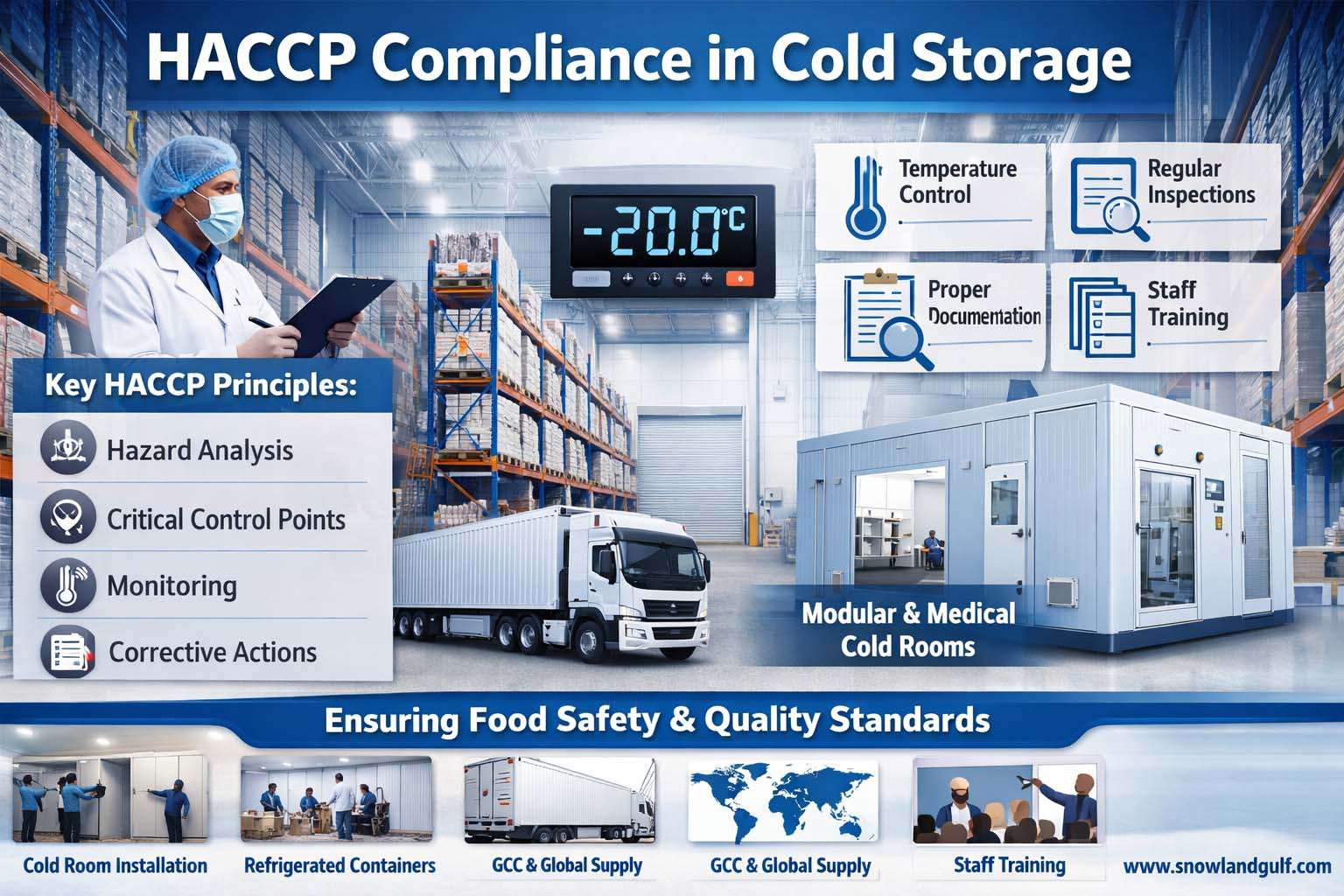 Maintaining food safety and product integrity is no longer optional. Instead, it is a regulatory necessity and a business differentiator. That is why HACCP compliance in cold storage plays a critical role across industries like food processing, pharmaceuticals, hospitality, and logistics.


