What is HACCP in blast chilling?
HACCP is a globally recognized food safety system. It is widely adopted across industries that depend on cold room and cold storage solutions.
Key HACCP principles include
- Identifying potential hazards in food handling
- Determining critical control points such as cooling stages
- Establishing temperature limits for blast chilling
- Monitoring and recording data consistently
- Taking corrective actions when limits are exceeded
For instance, blast chilling is considered a critical control point. Therefore, every cold room manufacturer must design systems that maintain accurate cooling cycles.
Furthermore, documentation is crucial. Businesses must record temperature logs and ensure traceability. This is where advanced cold storage manufacturer solutions become valuable.
How does FDA regulate blast chilling?
The FDA provides guidelines that complement HACCP principles. These are especially relevant for businesses exporting or operating under US food safety norms.
Key FDA requirements
- Cooling cooked food from 57°C to 21°C within 2 hours
- Further reducing temperature to 5°C within 4 hours
- Using calibrated thermometers for monitoring
- Avoiding overcrowding in cold storage units
In addition, FDA emphasizes equipment design. A professional cold room supplier in UAE or cold room manufacturer in GCC must ensure proper airflow and insulation.
Consequently, systems must support uniform cooling without temperature fluctuations.
Role of cold rooms in blast chilling compliance
Cold rooms are essential for maintaining chilled food after the blast chilling process. Without proper storage, the benefits of rapid cooling can be lost.
A reliable cold room supplier in India or cold room supplier in UAE ensures that the system maintains stable temperatures. Moreover, modern cold storage solutions include digital monitoring and alarms.
Key features required
- Uniform temperature distribution
- High quality insulation panels
- Hygienic design for easy cleaning
- Energy efficient refrigeration systems
Additionally, companies like Snowland focus on integrating blast chilling with advanced cold storage systems. This ensures end to end compliance with HACCP and FDA standards.
Choosing the right cold room manufacturer
Selecting the right partner is crucial for compliance and performance. A trusted cold room manufacturer in GCC or cold room manufacturer in Saudi Arabia understands regional conditions and regulatory expectations.
What should you consider?
- Experience in cold room installation in Bahrain and GCC markets
- Compliance with international safety standards
- Customization based on industry requirements
- After sales support and maintenance
Furthermore, a coldroom supplier in Oman or cold room manufacturer in Qatar should offer scalable solutions. This allows businesses to expand operations without compromising food safety.
Snowland, for example, provides tailored solutions for blast chilling and cold storage across the region.
How does technology improve compliance?
Technology plays a key role in maintaining standards. Digital sensors and IoT systems help monitor temperature in real time.
As a result, businesses can detect deviations instantly and take corrective actions. This reduces risks and improves audit readiness.
Moreover, modern cold storage manufacturer solutions integrate automation. This ensures consistent performance even during high demand.
Best practices for blast chilling
To meet HACCP and FDA standards, businesses should follow best practices consistently.
- Use shallow containers for faster cooling
- Avoid stacking hot food in cold storage
- Monitor temperature regularly
- Maintain hygiene during handling
- Train staff on food safety protocols
Additionally, partnering with a reliable cold room manufacturer in Kuwait or cold room supplier in India ensures proper system design and operation.

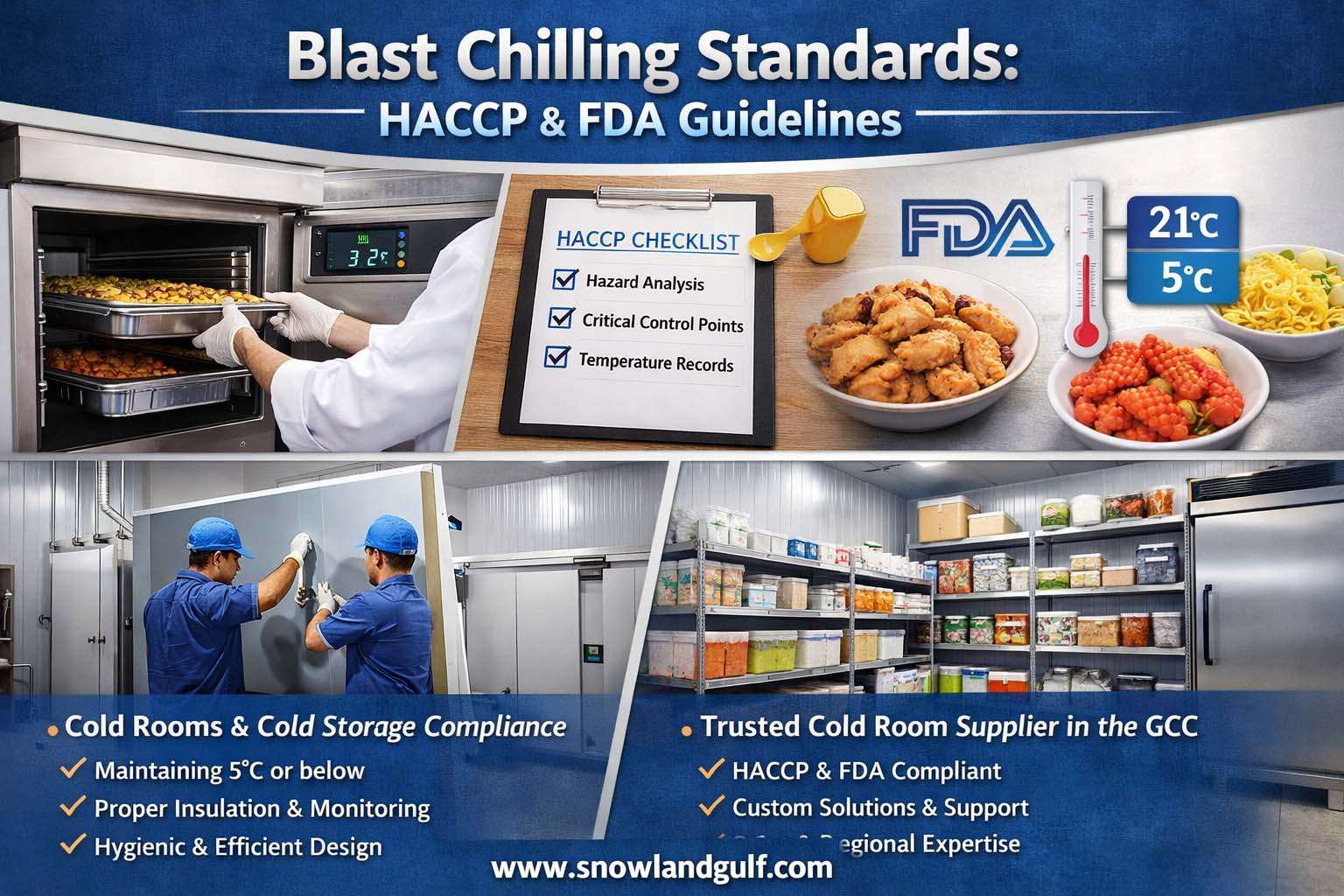 Blast chilling plays a critical role in modern food safety. It rapidly reduces the temperature of cooked food to prevent bacterial growth. However, the process is not just about speed. It must comply with strict global standards such as HACCP and FDA regulations. These frameworks ensure that food remains safe from preparation to storage.


