
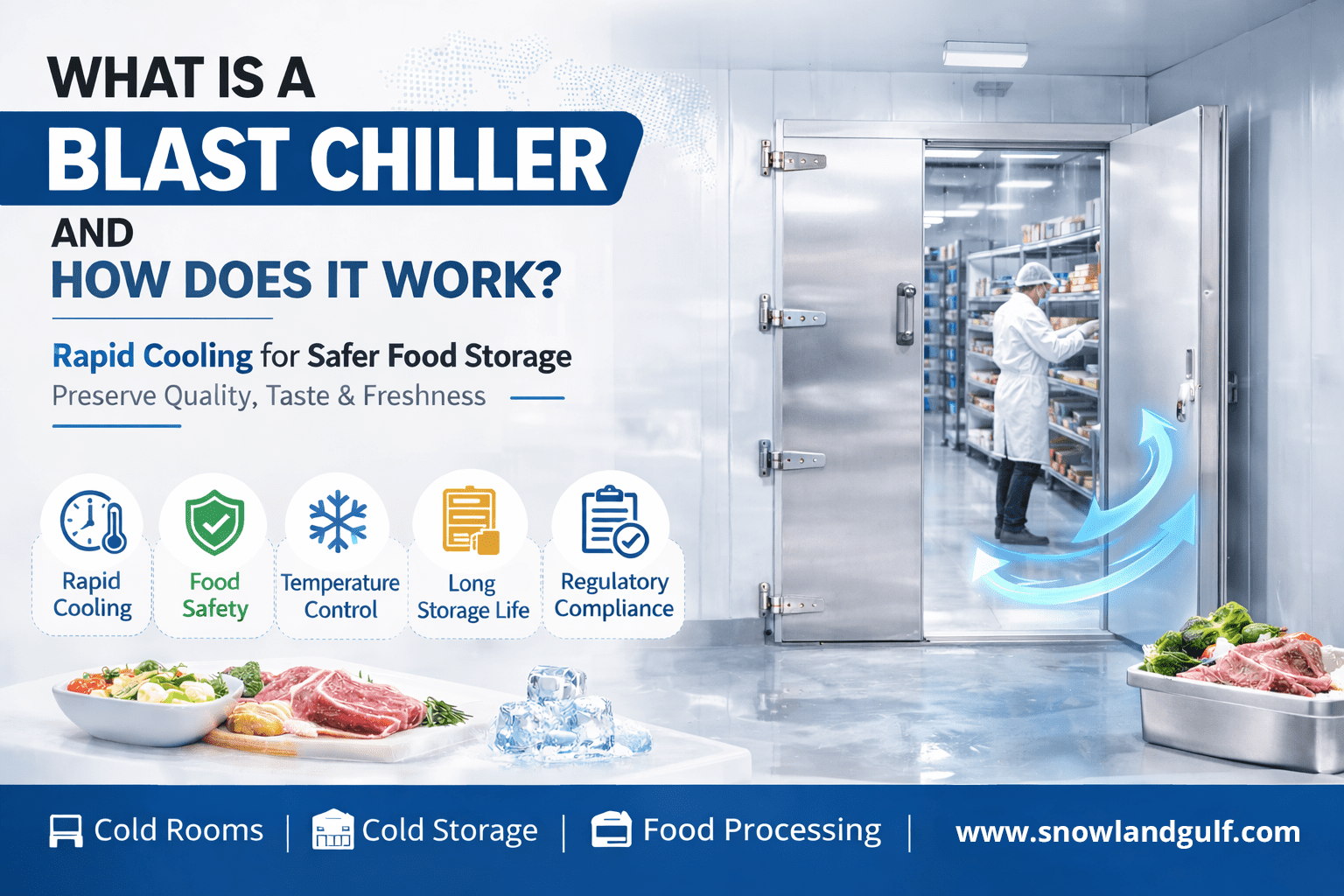
 Modern food processing, hospitality, and pharmaceutical industries rely heavily on precise temperature control. Therefore, rapid cooling equipment has become essential for maintaining food safety and product quality. Among these technologies, the blast chiller plays a crucial role in professional kitchens, food factories, and temperature controlled logistics systems.
A blast chiller quickly reduces the temperature of freshly cooked or processed food. As a result, it prevents bacterial growth and preserves taste, texture, and nutritional value. In addition, blast chilling supports efficient food handling before products are transferred to a cold room or cold storage facility.
Furthermore, industries such as catering, seafood processing, dairy manufacturing, and pharmaceuticals depend on blast chilling technology for safe product handling. Because of this demand, many companies work with an experienced cold room manufacturer or cold room supplier to design integrated cooling systems that combine blast chillers with cold storage infrastructure.
This detailed guide explains what a blast chiller is, how it works, and why it is essential for modern cold chain operations.
Understanding Blast Chiller Technology
A blast chiller is a specialized refrigeration unit designed to cool hot food rapidly. Unlike conventional refrigeration systems, it reduces the core temperature of food within a short period.
For example, freshly cooked food may cool from +90°C to +3°C within 90 minutes. Consequently, this rapid cooling minimizes the time food spends in the bacterial danger zone between 5°C and 60°C.
Because of this capability, blast chillers are widely used in:
- Commercial kitchens
- Food processing plants
- Bakeries and confectionery units
- Seafood processing facilities
- Catering and airline kitchens
Moreover, blast chillers often work together with a cold room or cold storage system to maintain the product temperature after the rapid chilling stage.
Therefore, many food businesses rely on an integrated solution designed by a professional cold storage manufacturer or cold room manufacturer in GCC to manage their cooling requirements efficiently.
Why Rapid Cooling Matters in Food Safety
Food safety regulations across the world emphasize temperature control. When hot food cools slowly, bacteria multiply quickly.
However, blast chillers solve this problem by reducing food temperature rapidly.
Key benefits include:
- Prevention of bacterial contamination
- Longer shelf life of products
- Preservation of flavor and texture
- Improved food safety compliance
- Better operational efficiency in kitchens
In addition, chilled products can be stored safely in a cold room or cold storage facility for later use.
Consequently, many restaurants and food factories install blast chillers along with cold rooms supplied by a reliable cold room supplier in UAE or a cold room supplier in India.
How Does a Blast Chiller Work?
The working principle of a blast chiller is based on high velocity cold air circulation combined with powerful refrigeration.
-
Loading Hot Food
First, freshly cooked food is placed on trays or containers inside the blast chiller cabinet.
Unlike standard refrigerators, blast chillers are specifically designed to handle hot food without affecting internal temperature stability.
-
High Speed Air Circulation
Next, powerful fans circulate extremely cold air across the food surface.
This rapid airflow removes heat quickly from the product.
As a result, the core temperature drops rapidly.
-
Advanced Refrigeration System
A blast chiller uses a high capacity refrigeration system. The compressor, condenser, and evaporator work together to generate intense cooling.
Because of this design, the equipment can remove heat much faster than conventional refrigerators.
-
Temperature Monitoring
Modern blast chillers use digital temperature probes to monitor the food core temperature.
Therefore, the system automatically stops the chilling cycle once the required temperature is achieved.
-
Transfer to Cold Storage
After chilling, the food is transferred to a cold room or cold storage area for long term preservation.
This workflow is common in large food production facilities where a cold room manufacturer in Saudi Arabia or a cold room manufacturer in Qatar designs integrated chilling and storage systems.
Blast Chiller vs Traditional Refrigeration
Although both systems provide cooling, their functions differ significantly.
| Feature | Blast Chiller | Standard Refrigerator |
| Cooling Speed | Extremely fast | Slow |
| Food Safety | High safety level | Moderate |
| Air Circulation | High velocity airflow | Limited airflow |
| Use Case | Hot food cooling | Food storage |
| Industrial Usage | Commercial kitchens and food plants | Household or small storage |
Because of these differences, blast chillers are usually paired with cold storage systems rather than replacing them.
A reliable cold room manufacturer in Kuwait or cold room manufacturer in Qatar often recommends both systems for complete temperature management.
Where Are Blast Chillers Used?
Blast chillers are widely used across multiple industries.
Food Processing Industry
Food factories produce large quantities of cooked or semi cooked food.
Therefore, blast chillers rapidly reduce temperature before the product moves into cold storage.
Hospitality Sector
Hotels and restaurants use blast chillers for advance food preparation.
As a result, chefs can cook food earlier and safely store it in a cold room until serving time.
Bakery and Confectionery
Bakeries use blast chillers to stabilize cakes, pastries, and chocolate products.
This process ensures consistent product quality.
Seafood and Meat Processing
Fresh seafood and meat require strict temperature control.
Consequently, blast chillers combined with cold storage manufacturer solutions maintain freshness and prevent spoilage.
Pharmaceutical Industry
Some medicines and vaccines also require rapid cooling during production.
Therefore, specialized blast chilling solutions are installed in pharmaceutical cold chains.
Key Components of a Blast Chiller
A blast chiller contains several critical components that ensure efficient cooling.
Compressor
The compressor compresses refrigerant gas and drives the refrigeration cycle.
Evaporator
The evaporator absorbs heat from the circulating air inside the cabinet.
Condenser
The condenser releases heat removed from the food.
High Speed Fans
Fans circulate cold air rapidly around the food trays.
Digital Control System
The control system monitors temperature, airflow, and cooling cycles.
Many advanced systems supplied by a cold room manufacturer in GCC also integrate smart monitoring and remote control features.
Types of Blast Chillers
Different industries require different blast chilling capacities.
Reach In Blast Chillers
These units resemble upright refrigerators and are suitable for small kitchens.
Roll In Blast Chillers
Large food trays or trolleys can be rolled directly into the unit.
Industrial Blast Chillers
These systems are used in large scale food factories.
They are often integrated with cold storage and distribution systems supplied by a coldroom supplier in Oman or a cold room installation in Bahrain specialist.
Choosing the Right Blast Chiller
Selecting the right blast chiller depends on several factors.
Cooling Capacity
The equipment should match the daily food production volume.
Space Availability
Kitchen layout and storage area determine the type of blast chiller required.
Energy Efficiency
Energy efficient systems reduce operating costs.
Integration with Cold Rooms
A blast chiller should work smoothly with a cold room or cold storage system.
Many businesses prefer integrated solutions from experienced providers such as Snowland, known for designing complete refrigeration infrastructure.
Why Integrated Cold Rooms Improve Blast Chilling
Blast chillers perform best when connected to an organized cold chain.
For example:
- Food is cooked.
- It enters the blast chiller.
- Rapid chilling occurs.
- The product moves to cold storage.
- Distribution or further processing begins.
This process ensures maximum food safety.
Therefore, food businesses usually consult a professional cold room supplier in UAE or a cold room supplier in India to design complete refrigeration systems.
Companies like Snowland specialize in such integrated solutions, combining blast chillers, cold rooms, and advanced refrigeration systems.


